
Samuel
Voiden is Now Open Source: Not a Big Deal, Yet Everything
Opensourcing Voiden is not a big deal.
Every company has open-source projects. It’s healthy. It’s expected. I’ve benefited from open source for my entire career - learning from code I didn’t write and strangers who fixed problems I couldn’t yet describe. Giving something back feels less like a grand gesture and more like paying off a very old tab.
So no, this isn’t a big deal. Except, inconveniently, it is.
Because for years, I’ve wanted to release something that wasn’t just a “better version” of someone else’s idea.
When we started, the world didn’t need yet another Postman clone. It didn’t need another incremental improvement on X or a slightly faster version of Y. We weren’t interested in polishing an existing category; we wanted to rethink what it actually feels like to work with APIs in the modern world. To build a tool that felt less like a cockpit of buttons and more like a bridge - between the developer and their intent.
Voiden took the long way round. Years of prototypes, rewrites, and moments of “this is clever, but I don’t actually want to use it.” We stripped away the noise until what remained felt calmer. More deliberate. An original vision for API tooling that doesn’t just manage requests, but respects the workflow - and the headspace - of the person making them.
It is, of course, far from perfect. There are a thousand things that could be improved, refined, rethought. That’s not a confession - it’s just the reality of building something opinionated, over time, in the open. Perfection was never the goal. Clarity was.
And now it’s open source, which brings two feelings that don’t usually arrive together.
There’s excitement. The kind that comes from letting a vision leave your head and exist without footnotes or explanations.
And then there’s the other one. The quieter awareness that every decision is now visible. That somewhere out there, a very smart person is already forming an opinion about a choice I made on a sleepy evening three years ago and never revisited.
But the bigger shift isn’t the scrutiny. That’s expected. It’s the letting go.
Open-sourcing Voiden means loosening my grip on a vision I’ve carried mostly alone. It means trusting that once something goes into the void, it doesn’t necessarily vanish - it changes. It means accepting that isolation makes things tidy, but collaboration makes them better.
So yes - this isn’t a big deal. And yes - it absolutely is, at least to me.
Voiden is now open source. With excitement. With nerves. And with the realisation that sending something into the void doesn’t always mean it disappears.
Sometimes the void sends things back. Let’s see what it has to say.
Related Posts
Phurpa Tsering
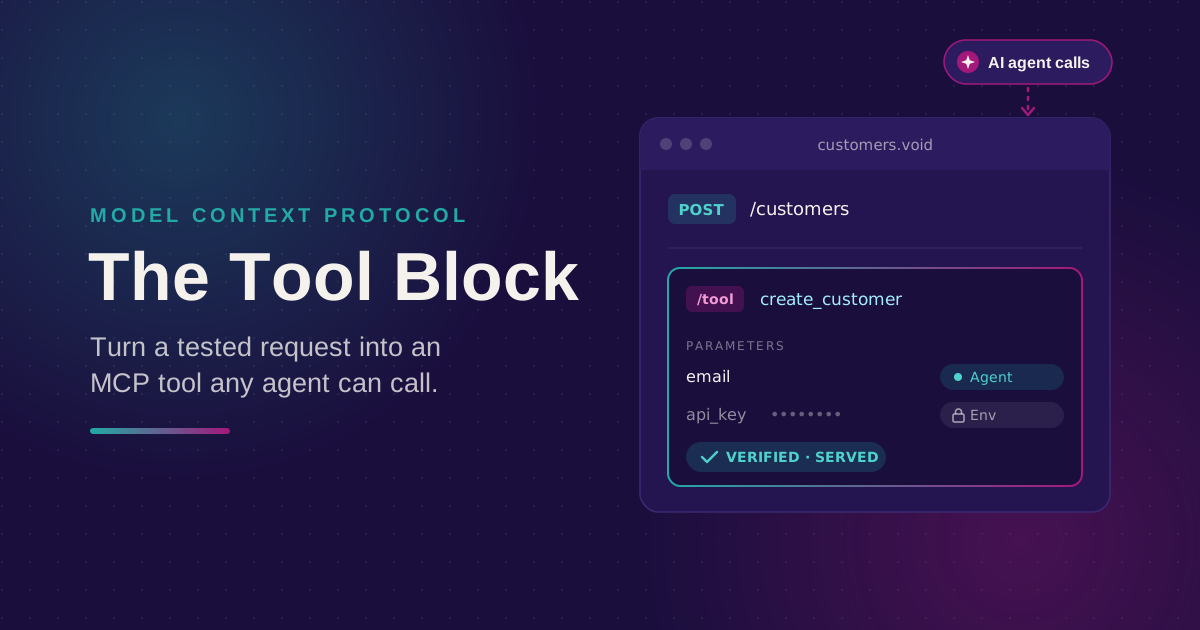
Turn Your Tested API Requests Into Agent-Callable MCP Tools
Turn a request you've already tested into an MCP tool that agents can call, then publish it with @voiden/mcp. Use stdio for local use, or --http/--tunnel for a server you can host.
Phurpa Tsering
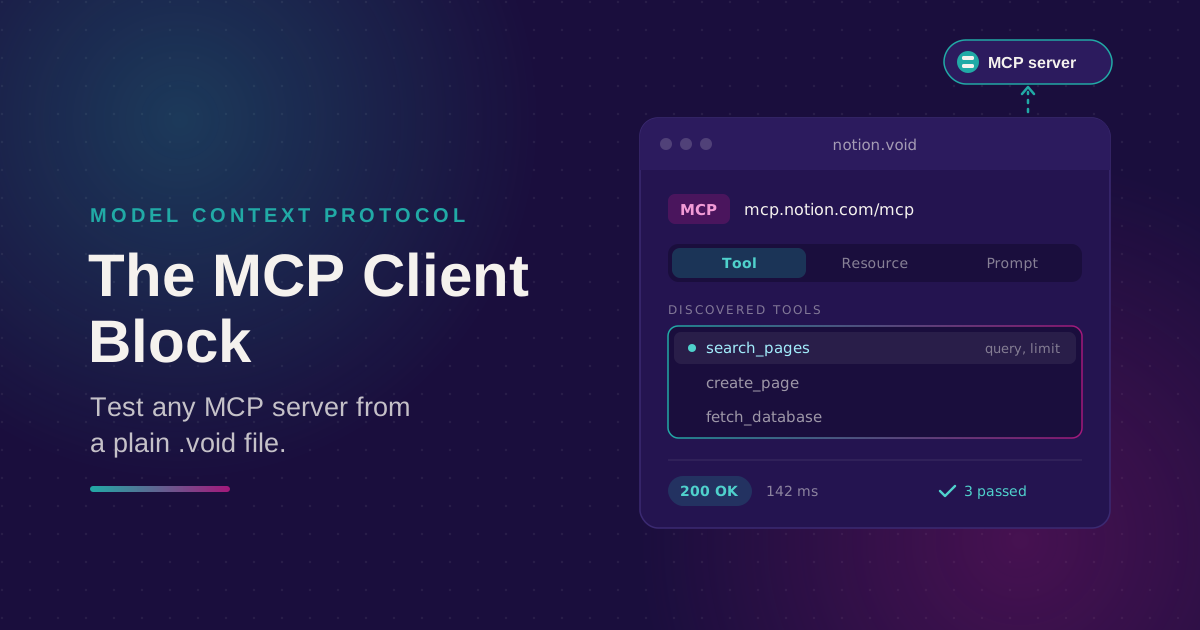
Bring Any MCP Server Into Your API Testing Workflow
Connect to any Streamable HTTP MCP server, browse its tools, resources, and prompts, and call one. Check the response with the same auth and assertion blocks you use for REST, all from a plain .void file.
Phurpa Tsering
Give Your Coding Agent Real Access to Your API Requests
One status-bar button (or one CLI command) registers your project with Claude Code or Codex over MCP, giving your coding agent the same six tools Voiden uses to list, run, and manage requests.