Nikolas
Postman vs Insomnia vs Bruno vs Hoppscotch vs Voiden: The 2026 API Client Comparison
Five API clients. On paper they do the same job: build a request, send it, read the response. So most comparisons line them up feature by feature, count the checkmarks, and declare a winner.
That misses the thing that actually changed in 2026.
The real difference between these tools isn't the request editor. It's where your API work is allowed to live. On a vendor's server. In a browser database. In a folder in your repo. The 2026 API client debate is a storage-and-ownership debate wearing a feature-comparison costume.
One disclosure before anything else: I helped build one of these five (Voiden). So read the Voiden sections knowing I'm not a neutral party. I've tried to be specific and fair about where the other four are genuinely better, because a comparison that pretends my own tool wins everything isn't worth reading.
What an API client is, and what the 2026 question really is
An API client is the tool you use to build, send, test, and document HTTP requests. Endpoints, headers, auth, bodies, environments, assertions: all of it.
Every tool here does that competently. So the question that separates them isn't "can it send a POST request." It's this: when you save your work, where does it go, who owns it, and can you read it without the tool that made it?
Here's the field, in one line each, sorted by that question:
- Postman — cloud-first. Your collections live on Postman's servers, an account is required, and as of March 2026 any team collaboration is paid.
- Hoppscotch — web-first. A browser-native, self-hostable ecosystem. Collections live in a database, yours or theirs, not in your repo as files.
- Insomnia — storage-flexible. The only one here that lets you choose local, Git, or cloud per project, though most of the product is gated behind a Kong account.
- Bruno — file-first, Git-native. Collections are plain-text files on disk, written in Bruno's own .bru markup language.
- Voiden — file-first, Git-native. Collections are plain Markdown .void files on disk, built from composable blocks.
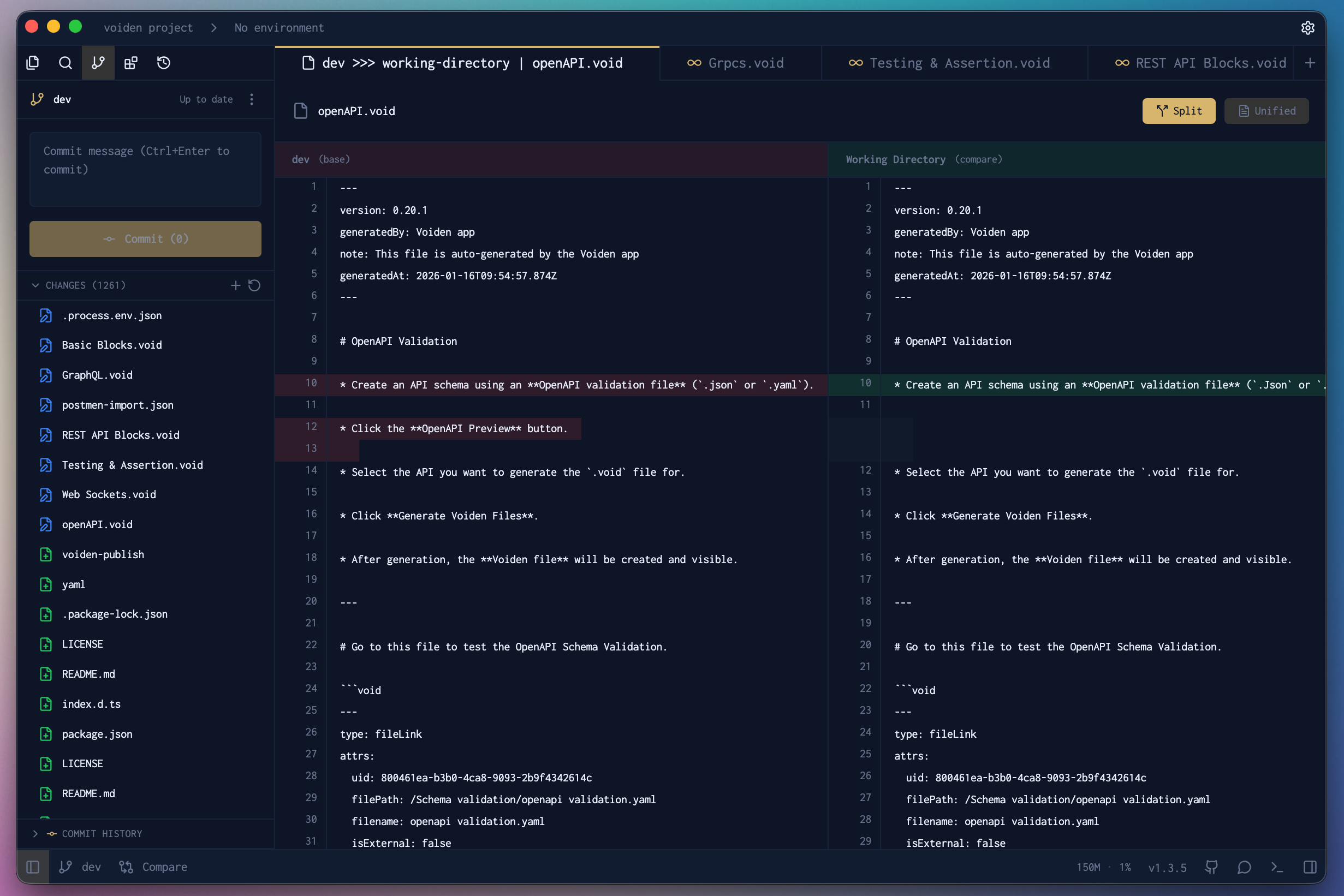
That spectrum, from "your work lives on someone's server" to "your work is plain files in your repo," is the whole story. Everything below is detail.
The comparison
All figures below were checked in June 2026. Star counts and pricing on tools like these move fast, so treat them as a mid-2026 snapshot, not permanent fact.
| Postman | Hoppscotch | Insomnia | Bruno | Voiden | |
|---|---|---|---|---|---|
| License | Proprietary | MIT | Apache 2.0 (app) | MIT core | Apache 2.0 |
| Storage model | Cloud workspace | Browser / self-hosted DB | Local / Git / Cloud | Plain-text files in Git | Plain-text files in Git |
| File format | Proprietary (JSON export) | JSON / DB | Proprietary | .bru (own DSL) | .void (plain Markdown) |
| Readable without the tool? | No | No | No | Not really | Yes, it's Markdown |
| Account required? | Yes | No (local) / Yes (cloud) | Yes for most features | No | No |
| Offline-first? | No | Partial / Yes (desktop) | Optional (Local Vault) | Yes | Yes |
| Telemetry | Yes | Configurable | Yes | No (core) | None |
| Protocols | REST, GraphQL, gRPC, WS, MQTT | REST, GraphQL, WS, SSE, MQTT, Socket.IO, gRPC | REST, GraphQL, gRPC, WS, SSE, SOAP | REST, GraphQL, gRPC, WS | REST, GraphQL, gRPC, WS |
| Docs + tests in the same file? | No | No | No | No | Yes |
| CLI for CI/CD | Yes (Newman) | Yes (hopp) | Yes (Inso) | Yes (bru) | Yes (runner) |
| Free for a 5-person team? | No ($19/user/mo) | Yes | Yes | Yes (core) | Yes |
| GitHub stars (mid-2026) | n/a (closed source) | ~79k | ~40k | ~44k | ~1k |
Voiden is the newest name on that list, and the star count reflects age, not capability. The reason to look at it is the architecture, which is what the rest of this post is about.
Where each one genuinely shines
Postman is still the most complete platform on the market, and it isn't close. Mock servers, monitors, Flows for visual API workflows, an enormous template and integration ecosystem, AI-assisted test generation, governance and security tooling for large orgs. If you're an enterprise that needs hosted infrastructure and a managed product with a support contract, Postman does things the others simply don't. The 2025 State of the API report is still the reference everyone else gets measured against. That position was earned.
Hoppscotch has the broadest protocol coverage of the five: REST, GraphQL, WebSocket, SSE, MQTT, and Socket.IO in one place, which is rare in a free tool. It's browser-native, so there's nothing to install to get started, and it has a genuinely strong self-hosting story for teams that need data sovereignty: MIT-licensed, deployable on your own infrastructure, with real-time collaboration. For a regulated team that wants to leave Postman's cloud but keep hosted collaboration, Hoppscotch is one of the most credible options going, and its ~79k GitHub stars reflect that.
Insomnia has the most flexible storage model of anyone here, and it's the real reason to pick it. It's the only client that lets a single team keep some projects 100% local, some in a plain Git repo, and some in end-to-end-encrypted cloud sync, choosing per project. It's Kong-backed, mature, Apache 2.0 on the desktop side, with a strong design-first OpenAPI editor, native mocking, a CLI for CI, and MCP client support for agentic workflows. If you want storage choice without committing to a pure-Git discipline, Insomnia is the genuine middle path.
Bruno is the tool that proved a plain-text, Git-native API client could win a real audience. It crossed 44k stars by May 2026, ships two to three releases a month, and has a large contributor base. Its MIT-licensed core is genuinely free with no per-user limit. When Postman cut free team workspaces in March 2026, Bruno is where a lot of teams went, and for good reason. The decision to store collections as files in your repo, reviewable in a normal PR, is the right idea. Voiden shares that idea. We're downstream of Bruno proving the category exists.
Voiden takes the file-first, Git-native idea and pushes it further than anyone: plain Markdown, composable blocks, and requests, tests, and docs in one file. It's the newest of the five, with roughly 1k GitHub stars and 12k+ downloads in mid-2026, growing steadily. What it does differently is structural, and that's the rest of this post.
Where each one lags
No tool here is free of trade-offs. Anyone who tells you otherwise is selling something.
Postman: the cloud is no longer optional. The offline Scratch Pad went away in 2023, and since March 2026 the free plan is single-user only. A five-person team that paid nothing last year now starts at roughly $912/year on the $19/user Team plan. Your collections live on Postman's servers by default, with telemetry on. For local, code-adjacent work, that's a lot of platform you didn't ask for.
Hoppscotch: the same browser-first architecture that makes it instant also means your collections aren't files in your repo. They live in a database, in the browser or on a self-hosted instance. Self-hosting is a real operational lift: a frontend, a backend, an admin dashboard, Postgres, and Redis. That's a reasonable price for data sovereignty at a company, but it's not "my requests are plain files next to my code."
Insomnia: most of the product is gated behind a Kong account. You can run the local Scratch Pad without signing in, but the full feature set, including the storage flexibility that's its best quality, expects you to log in. That account requirement is what pushed a chunk of its old user base toward Bruno in the first place, and telemetry is on. The format also isn't something you can read without Insomnia.
Bruno: .bru is a proprietary domain-specific language. A .bru file is plain text, which is good, but you need Bruno to make sense of it. Its scripting also runs in a JavaScript sandbox that can't reach your real filesystem or shell, which is safe but limiting. And in 2026 Bruno retired its one-time ~$19 Golden Edition in favor of subscription tiers (Pro at $6/user/mo, Ultimate at $11/user/mo). That shift drew real pushback from people who'd bought the lifetime license, and it's worth weighing if long-term pricing direction matters to you. The open-source core remains free.
Voiden: the community and plugin ecosystem are younger than the incumbents', so there's less third-party tooling built around it today than around Postman or Bruno. And it's built on Electron, which carries a heavier footprint than a leaner stack. That's a deliberate choice, for cross-platform stability and deep system access over a lighter shell that breaks in subtle ways, but it's a real trade-off and you should know it's there.
The three differences Voiden built around
Strip away the feature-table noise and there are three structural choices that separate Voiden from the rest. I'll use the same "others do X, we do Y" framing throughout, because it's the honest way to say it.
1. What the file actually is.
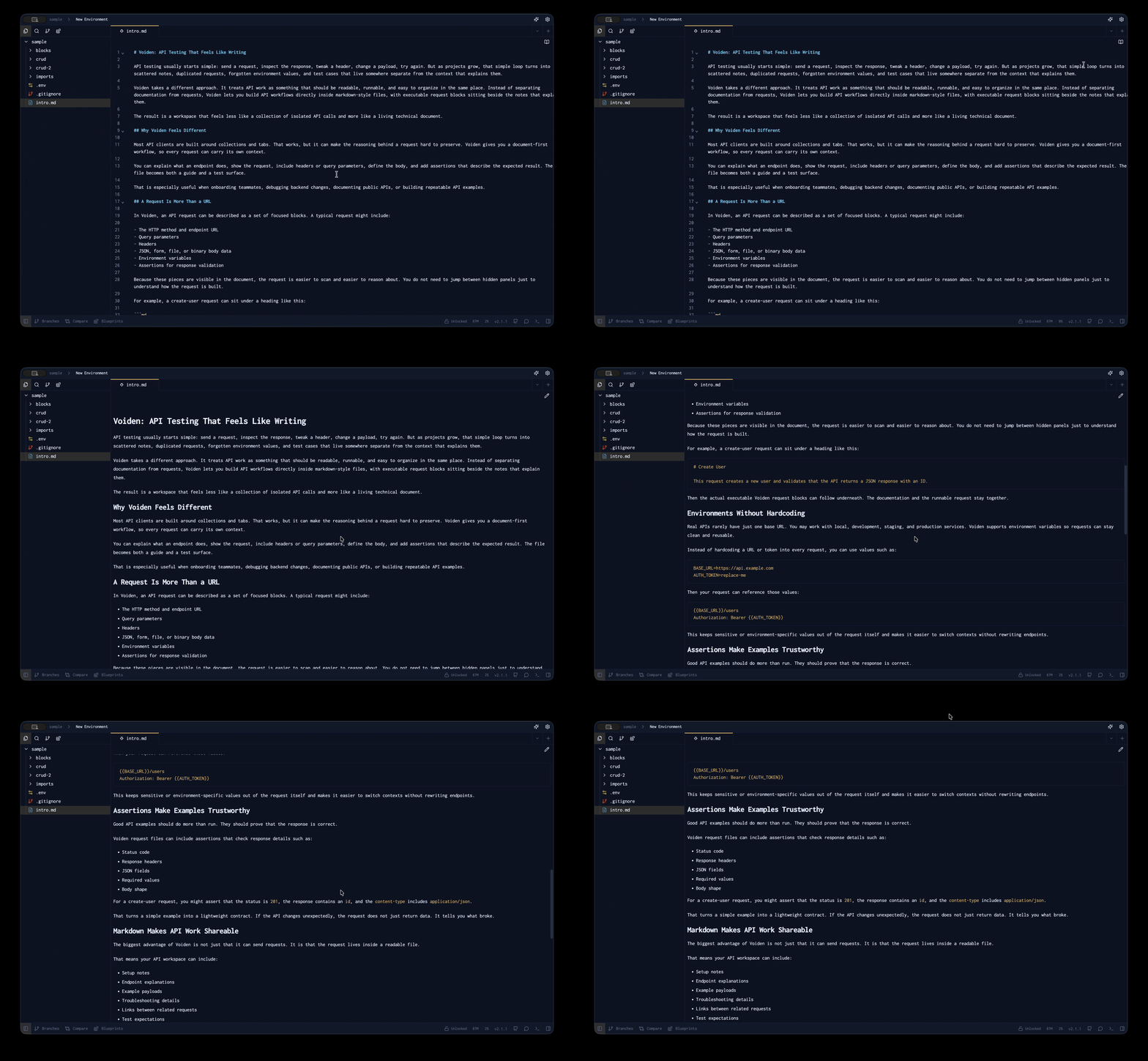
Others store your work as a JSON export, a database row, or a proprietary DSL. Voiden stores it as plain Markdown.
Result: a .bru file needs Bruno to read it. A Postman or Insomnia export needs its own tool to mean anything. A .void file is just Markdown, readable in any editor, on any machine, with Voiden uninstalled entirely. The file format is not a detail. It's architecture.
2. How a request is built.
Others treat a request as one monolithic form: fill in the URL, the headers, the body, save the blob. Voiden treats a request as composable blocks: endpoint, auth, params, body, scripts, each its own block that can be added, reused, overridden, and stitched together.
Result: you define an auth block once and reuse it across fifty endpoints. Change it in one place. The diff in your PR shows exactly what moved.
3. Where docs and tests live.
Others keep requests in the API client, docs in Notion or Confluence, and tests somewhere else again. Voiden keeps the request, its tests, and its documentation in the same executable .void file.
Result: the docs can't drift out of sync with the request, because they're the same file. When you open a pull request, the diff reads like "added OAuth block, updated base URL, fixed the login endpoint," all in one view, reviewable like any other code change.
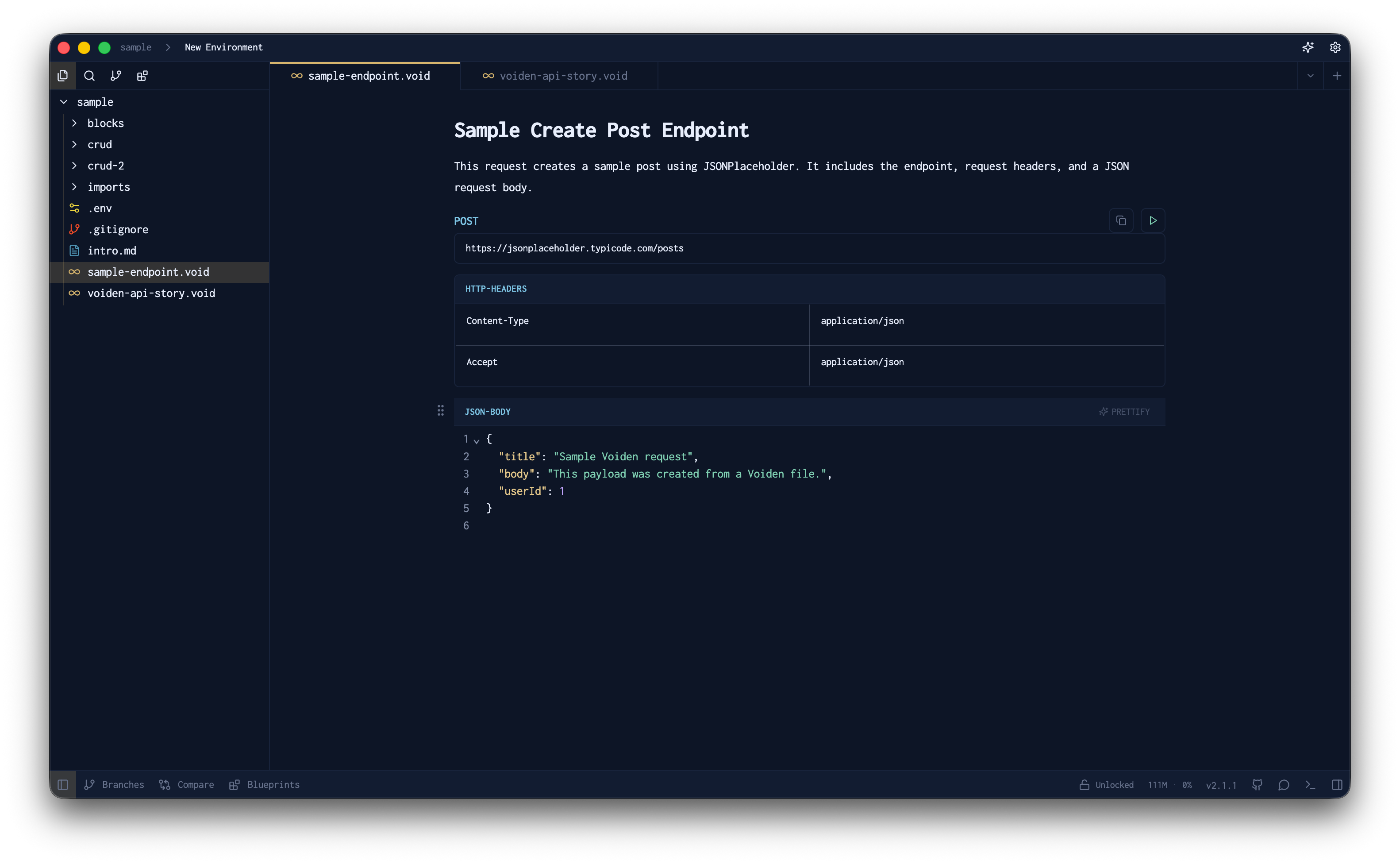
There's a short video walking through the plain-text, block-based workflow against Postman directly, if you'd rather watch than read: https://youtu.be/mpMarhwODY4
So which one should you actually use
A comparison that ends in "it depends" is a cop-out, so here's a real answer.
If you're an enterprise that needs hosted mocks, monitors, governance, and a support contract, Postman is still the most complete choice, and the per-seat cost is the price of that completeness. If you want to leave the cloud but keep hosted, multi-protocol collaboration and you can run infrastructure, Hoppscotch is excellent, especially for regulated teams. If you want storage flexibility, local or Git or cloud per project, and you're fine signing into a Kong account, Insomnia is the mature middle path. If you want a proven, Git-native, plain-text client with a big community right now, Bruno is the safe pick.
And if your actual pain is that your docs drift, your auth tokens are a mess, and your tests live in three places, and you want all of it in one plain-Markdown file in your repo, that's the specific problem Voiden was built for. It's the one tool here where the file is just Markdown and the request, the test, and the doc are the same thing.
Pick the one whose trade-offs you can live with. They're all real tools built by people who care, and the category is healthier for having five honest answers instead of one cloud default.
Voiden is free and open source: grab it at https://voiden.md/download, or read the code at https://github.com/VoidenHQ/voiden if you want to see how the .void format works under the hood.
Related Posts
Phurpa Tsering
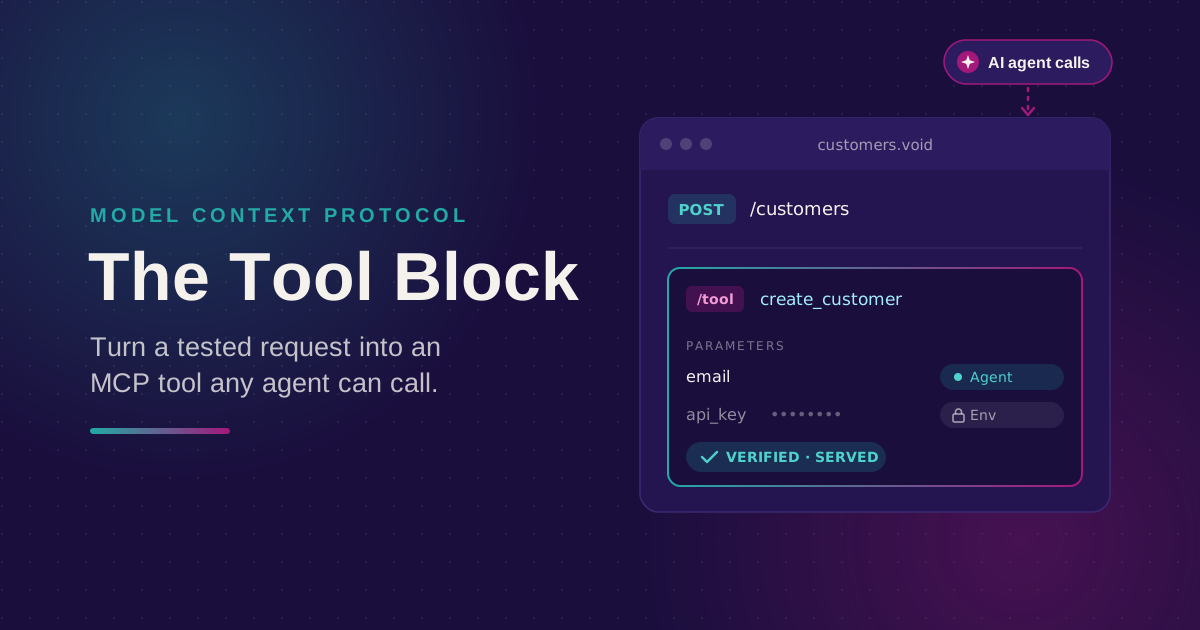
Turn Your Tested API Requests Into Agent-Callable MCP Tools
Turn a request you've already tested into an MCP tool that agents can call, then publish it with @voiden/mcp. Use stdio for local use, or --http/--tunnel for a server you can host.
Phurpa Tsering
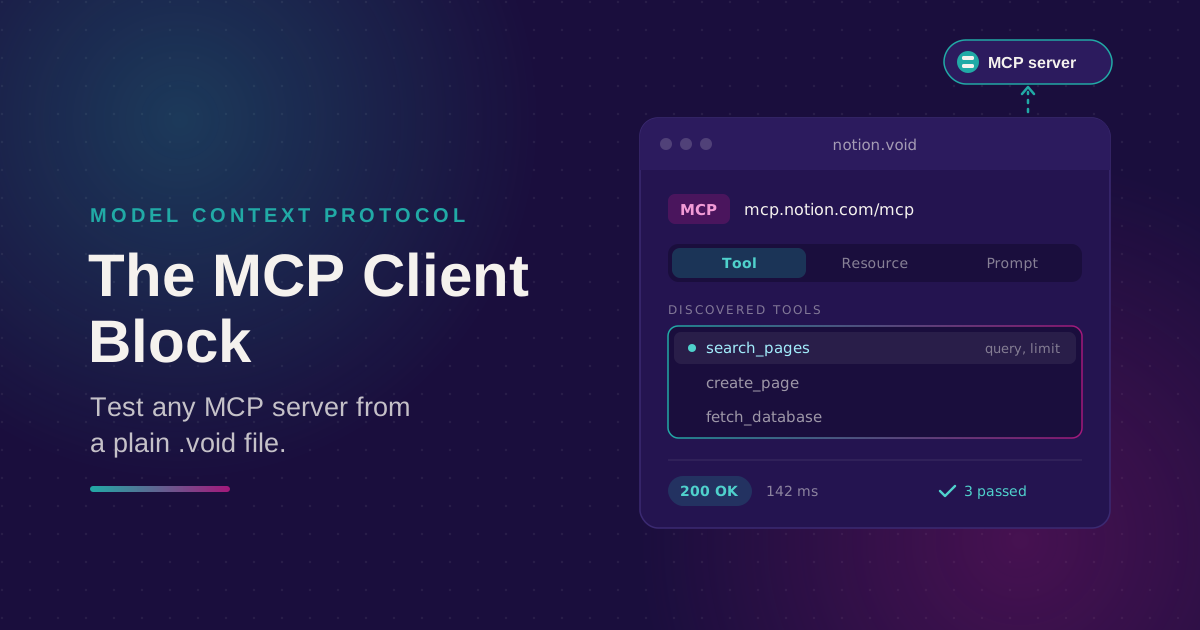
Bring Any MCP Server Into Your API Testing Workflow
Connect to any Streamable HTTP MCP server, browse its tools, resources, and prompts, and call one. Check the response with the same auth and assertion blocks you use for REST, all from a plain .void file.
Phurpa Tsering
Give Your Coding Agent Real Access to Your API Requests
One status-bar button (or one CLI command) registers your project with Claude Code or Codex over MCP, giving your coding agent the same six tools Voiden uses to list, run, and manage requests.